

ARCHITECTURE
Stay in the heart of the Seto Inland Sea, experiencing a Japan that is both old and new.
A space where tradition and modernity harmonise, designed by architect and artist Fumihiko Sano.
The building is full of designs that reflect Hiroshima’s culture and history.
In the entrance hall, there is a gallery space modelled on the Noh stage at Itsukushima Shrine, while the ceiling features soft-glow lighting crafted in Hiroshima Prefecture, inspired by the lantern procession on Miyajima.
This gallery space showcases masterpieces carefully selected from across Japan, including works with ties to Hiroshima. From local culture to the craftsmanship for which Japan is renowned, visitors can enjoy these pieces alongside the stories behind them, and exhibitions are rotated regularly to guarantee a new discovery with every visit.
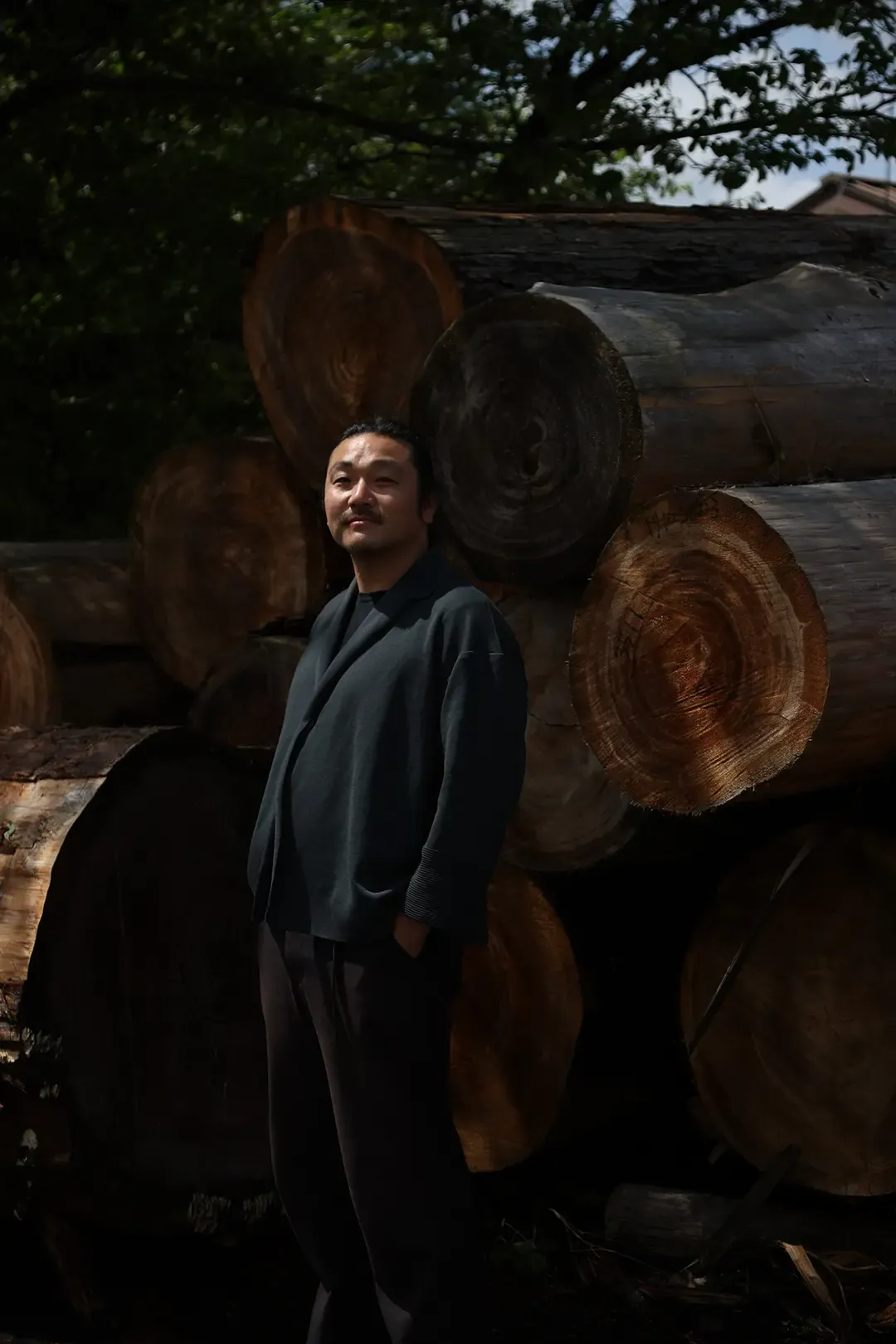
Architects and Artists
Fumihiko Sano
Born in Nara Prefecture in 1981. Apprenticed as a Sukiya carpenter at Nakamura Sotoji Construction in Kyoto before establishing his own design office in 2011. Using construction techniques, materials, and dimensional sensibilities from his personal experience, Sano-san creates works that explore the essence of contemporary Japanese culture from the conceptual stage. In 2016, he served as a Cultural Envoy of Japan’s Agency for Cultural Affairs, visiting and working on projects in 16 countries. Focused on creating new value within diverse regional cultures, Sano-san is active in multi-disciplinary activities covering architecture, interior design, product design, and installations in Japan and worldwide. EDIDA 2014 ELLE DECO Young Japanese Design Talent, IF DESIGN AWARD 2020 winner, 2016 Cultural Envoy of Agency for Cultural Affairs, Dezeen Awards shortlists, FRAME AWARD-nominated, IDEA-TOPs-nominated, Design and Build Awards, etc.
ART
‘Keihaku’: Connecting Travel and Culture.
The hotel displays artworks curated around the concept of ‘Keihaku’.
‘Keihaku’ means ‘to moor a ship’ or ‘for a ship to dock’. We have imbued this term with the idea of connecting Itsukushima Shrine and Miyajimaguchi, people with one another, and travel with culture.
Works expressing traditional Japanese culture—such as calligraphy, ink wash painting, Japanese painting and ceramics—through a contemporary sensibility are scattered throughout the building, offering new encounters and discoveries during your stay.
Daichirō Shinjo
Calligraphy (2nd Floor Lobby)
Born on Miyako Island, Okinawa; his grandfather was both a Zen monk and folklorist. Drawing on the traditions of Zen and Okinawan spiritual culture, Shinjo is an artist who pursues a contemporary style of calligraphy that transcends conventional forms. The concept behind this work is ‘ma’ (interval). It was created with the theme of evoking the tension and shifting emotions experienced before crossing to Itsukushima—the ‘Island of the Gods’—and the moment when body and mind become intertwined.
Yuta Niwa (YUTA NIWA)
Japanese Painting (2nd Floor Lobby)
Born in Kanagawa in 1993. After completing his postgraduate studies at Kyoto University of the Arts, Niwa studied abroad in Beijing. He currently lives and works at Kōmyō-in, a sub-temple of Tōfuku-ji. Working within the context and techniques of Japanese painting, his work explores the theme of calamities invisible to the human eye and the prayers of those who resist them. ‘Sōkai Shuketsu-zu’ (Picture of the Vermilion Wedge in the Vast Sea), on display in the 2nd Floor Lobby, depicts the ‘Ōhanzaki’—a symbol of the raging forces of nature lurking in the land of Hiroshima—and the ‘vermilion wedge’ that holds it in check. The vertical vermilion line running through the composition symbolises the torii gate at Itsukushima, and is likened to a ‘wedge’ that has rained down from the heavens and been driven into the sea.
Hiroki Miura (HIROKI MIURA)
Ceramics (2nd Floor Lobby & Guest Rooms)
Born in Hiroshima. After graduating from Arita Ceramic College, Miura established his own practice in 2020. Based in Takeo City, Saga Prefecture, he creates ceramic works rich in expression, utilising a range of techniques from open-air firing to modern kilns. Large vases, inspired by the designs of window paintings on traditional pottery, are displayed in the 2nd Floor Lobby and the ‘Midori’ Premium Suite.
Other Artists
TATSUHIRO SUIZU /
MYU HANAOKA /
KANSAI NOGUCHI /
HIROSHI YABE /
KaILI /
AYANA MIZUNO /
KANO KAMEGAWA /
KAMISOE /
NATSUMI KAWASAKI /
MASAYUKI KOITABASHI /
Antique & Art MASA
We have art catalogues available for those who are interested.